


Flexible Automation for Sheet Metal Job Shops and Subcontractors
Job shops and subcontract sheet metal manufacturers do not operate under stable production assumptions. They move between sectors, materials, thicknesses, geometries, batch sizes, and customer priorities with limited planning visibility and strong delivery pressure. In many cases, the challenge is not simply to produce different parts. It is to keep the factory productive and reliable when the production model changes quickly.
In this context, flexibility is not a generic advantage. It is a production requirement. Job shops need technologies that can adapt quickly, reduce setup dependency, support many different component types, and keep production flowing when operator availability, order visibility, and customer priorities are under pressure. Salvagnini addresses this need through sheet metal technologies, software, automation modules, and flow-support options that can be configured around the job shop’s main constraint: setup, programming, logistics, or connected production.
- Absorb volatile mix with less setup dependency and faster adaptation to changing jobs
- Reduce the losses created by setup-heavy work, manual handling, programming overload, and unstable utilizations
- Strengthen programming, material flow, sorting, and scalable automation paths across high-mix production
Who this page is for
This page is intended for owners, operations managers, production managers, technical managers, planners, and engineering managers in subcontract and job shop environments. It is especially relevant for companies that need to manage high-mix production with limited scheduling visibility, compressed lead times, and frequent changes in materials, geometries, and customer requirements. It is also relevant for decision-makers who want to increase output without tying the factory too closely to one customer, one sector, or one narrow production model. In job shop manufacturing, the value of the investment often depends on how well the plant can react to future opportunities that are not yet fully visible when the machine is ordered.
Applications, products, and recurring production realities
Job shops may produce enclosures and cabinets, panels and covers, brackets and mounting plates, chassis and racks, ducting-related parts, formed-feature components, and many other sheet metal parts within the same production environment. The point is not only variety at product level. The point is that the factory may need to switch rapidly between very different jobs, often with different thicknesses, materials, tolerances, routings, and urgency levels.
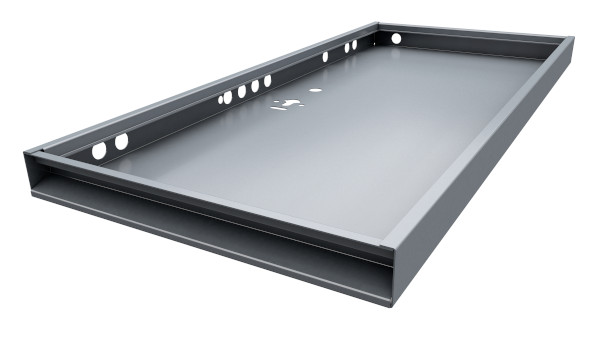
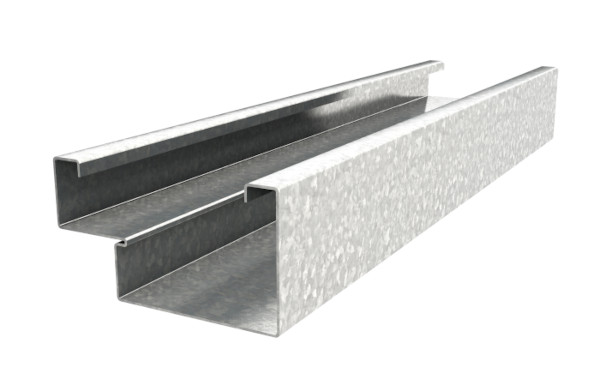
That is why the key issue is not simply stand-alone machine capacity. It is the ability to keep production flowing when the mix changes constantly. Setup discipline, programming speed, material availability, sorting, handling, and downstream coordination all become decisive in maintaining delivery performance and controlling production cost.
Typical recurring job shop realities include:
- short runs, one-offs, and prototyping
- kit production, and variable batch sizes
- mixed families combining cosmetic parts and structural parts
- box-like parts such as cabinets, enclosures, covers, drawers, and doors
- brackets, supports, mounting plates, and feature-dense parts
- evolving market conditions, where the next profitable opportunity may require different materials, geometries, or routing logic from the current one
Your main manufacturing challenges
- Volatile mix and limited planning visibility
Many job shops move from one sector to another, or from one part family to another, with very little stability in planning. What is urgent this morning may be replaced by a different priority a few hours later. This uncertainty increases pressure on machinery, software, and operators, because the factory must remain reactive without restarting the production logic every time the mix changes. - Setup pressure and rapid adaptation to changing jobs
In high-mix environments, setup time is not only a local efficiency issue. It is a direct risk to delivery performance. When programs, materials, and part geometries change constantly, long or skill-dependent changeovers reduce usable production time and make the shop more fragile under urgent orders. Technologies designed for minimal setup intervention and rapid adaptation therefore have strategic value in job shop manufacturing. - Productivity under price pressure
Job shops are often exposed to strong price pressure. In this context, flexibility alone is not enough. The factory also needs productive and fast technologies that reduce the time lost in changeovers, repeated programming, internal waiting, and manual handling. Productivity becomes part of the cost-control strategy, not only a capacity topic. - Programming overload across many different components
The bottleneck is not always at the machine. In many job shops, programming, nesting, and routing decisions consume too much time because too many different parts need to be prepared quickly and correctly. Digitalization and automatic programming can help reduce this upstream friction, simplify the management of mixed orders, and improve production continuity from office to shop floor. - Logistic friction: material availability, handling, sorting, and internal flow
Response time depends also on logistic continuity. When material is not readily available, when parts wait between operations, or when handling and separation depend too heavily on manual intervention, the plant loses responsiveness. In high-mix environments, automation can help strengthen material availability, reduce waiting time, improve sorting and part flow, and make internal logistics more resilient. - Complexity across disconnected processes
Many job shops grow by adding stand-alone technologies over time. This can work, but it can also create fragmentation between operations. The result is often more WIP, more manual coordination, and less predictability when priorities change suddenly. In these conditions, the challenge is not only automation. It is complexity management.
The real question is not whether to automate everything at once.
It is which source of uncertainty is creating the most friction today, how much flexibility the plant needs tomorrow, and which production path can improve performance without tying the investment too closely to the current mix.
Choose the production path that fits your job shop
An order-driven subcontractor under price pressure, a shop limited by logistic discontinuity, and a plant overwhelmed by programming complexity do not need the same starting point. Before selecting a technology path, identify the constraint that most often disrupts delivery: setup time, programming, material availability, part separation, bending capacity, internal handling, or coordination between stand-alone processes.
Salvagnini configurations should therefore be evaluated around the actual constraint: productivity, logistics, programming, or broader system complexity. The right configuration depends on recurring part families, material and thickness range, bend geometry, batch profile, routing logic, downstream operations, and the point where the current flow loses the most time.
If your priority is to reduce production losses under price pressure
This path is relevant when competitiveness depends on producing faster, with less setup dependency and less reliance on labor. In these conditions, the investment depends on reducing the time lost in programming changeovers, manual setup, handling, and internal waiting. Where the part families fit, panel benders can support rapid changeovers, repeatable results, and reduced setup intervention for box-like and multi-bend parts. In other contexts, fiber laser systems, punching machines, or press brakes may be the more appropriate entry point. The objective is not to force one technology everywhere, but to increase productive time where volatility is currently creating cost and delivery pressure.
What this path typically helps improve:
- productive time under frequent job changes
- repeatability with less dependence on manual setup
- capacity use across variable part families
- production cost control in high-mix, low-volume environments
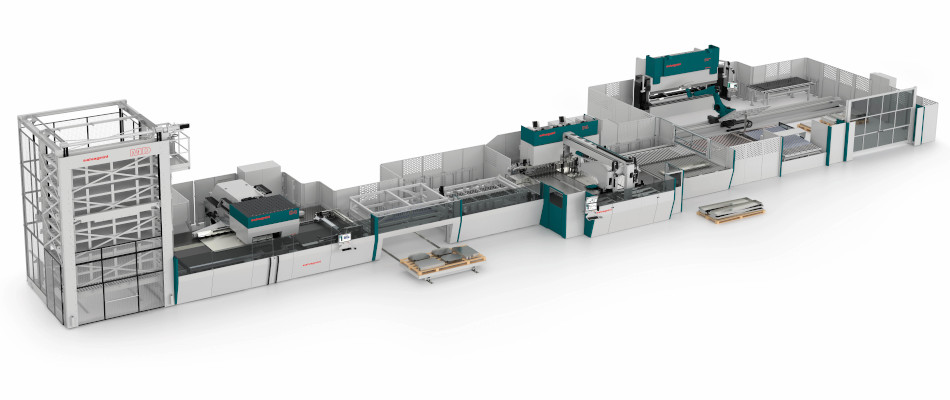
If your priority is to strengthen logistic continuity
This path is relevant when the main issue is not machine speed alone, but the ability to keep the right material available and the right parts moving. In many job shops, reactivity is reduced by interruptions in material availability, manual handling, waiting time between operations, and weak separation or sorting logic. Automation, storage, sorting, and software support for part separation can strengthen logistic continuity and reduce dependence on labor. This can support faster reprioritization when the constraint is material availability, part separation, sorting, or waiting time between cutting and bending.
What this path typically helps improve:
- material availability for changing jobs
- waiting time between operations
- internal handling and part movement
- sorting discipline and flow reliability under variable mix
If your priority is to reduce programming complexity
This path is relevant when the real bottleneck sits upstream: too many parts, too many routings, too many priorities, and too much manual effort in preparing production. In high-mix job shops, digitalization and automatic programming can help manage component diversity more efficiently and reduce friction before the part even reaches the machine. Software such as STREAM and OPS can support programming, production data exchange, and more consistent coordination between office and shop floor. The value is not only faster programming. It is more controlled release logic when mixed orders, urgent changes, and many different part families must be managed at the same time.
What this path typically helps improve:
- programming and nesting workload
- production release consistency
- data exchange between office and shop floor
- visibility and coordination in mixed-order production
If your priority is to manage broader system complexity
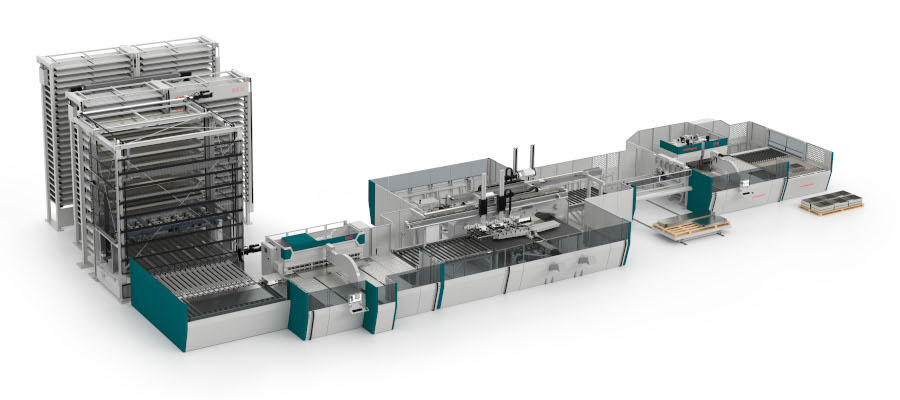
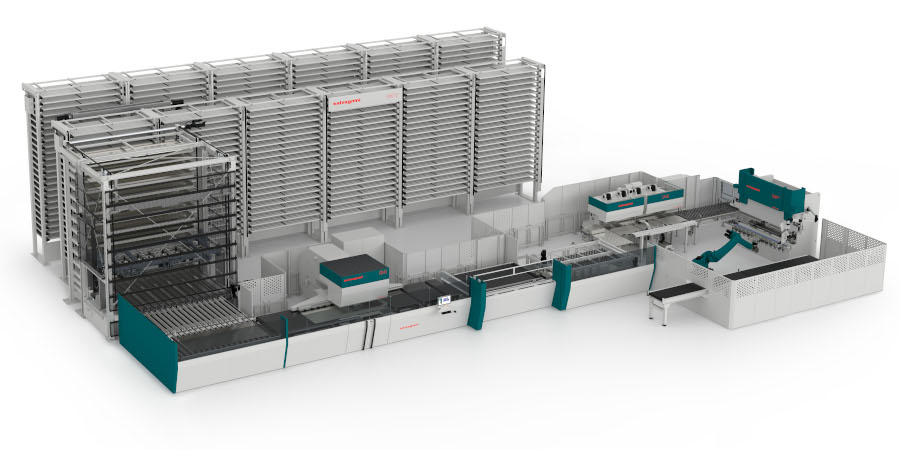
This path is relevant when isolated improvements are no longer enough. Some job shops face a combination of volatile demand, disconnected machines, manual coordination, logistic friction, and weak production visibility. In these cases, the issue is not simply one bottleneck. It is the interaction between many small bottlenecks across the flow. A more connected configuration, including software, storage, machines, automation devices, and sorting, can help create a more coherent high-mix production environment. This approach is particularly relevant when the plant needs scalable automation without locking the investment into a rigid or customer-specific structure.
What this path typically helps improve:
- complexity management across mixed jobs
- resilience when priorities shift quickly
- coordination between software and machines
- scalability of the automation roadmap over time
Phased automation instead of fixed transformation
Not every job shop needs to move immediately to a fully connected system. In many cases, the better path is to start from the constraint that is generating the most friction today, then extend the solution over time as the production model evolves. That may mean beginning with a highly productive bending or cutting technology, strengthening logistic continuity with storage and sorting, improving programming and production visibility with software, or connecting more technologies later through automation devices. This is especially important in job shop manufacturing, where future market opportunities are often only partially visible when the first investment is made.
Why this approach is relevant in job shop manufacturing
Job shops need more than nominal flexibility. They need a factory that can react to uncertainty without losing pace. That means producing under price pressure, absorbing frequent changes with minimal setup penalty, managing many different programs, and maintaining logistic continuity when material availability and internal flow are under pressure.
Salvagnini is relevant when the evaluation extends beyond a single machine and includes programming, material flow, separation, bending, logistics, and the possibility of scaling automation over time. The value is not in applying the same configuration to every job shop. It is in identifying where the plant is losing time today and defining a path that can remain useful as customers, sectors, part families, and volumes change.
In other words, flexibility is valuable because it helps preserve optionality: commercial optionality, production optionality, and investment optionality.
Economic rationale: where flexibility affects cost and risk
For job shops and subcontractors, the investment case should not be reduced to a generic productivity message. The real question is where cost and risk are being generated today.
Typical drivers include setup-heavy production, manual changeovers, programming overload, waiting time caused by weak logistic continuity, manual handling between operations, unstable utilization under urgent orders, and investments that fit the current mix too narrowly.
A phased automation path can start from the most visible loss source — programming, setup, handling, waiting time, bottleneck labor, or poor flow coordination — and extend only when the production model requires it. This reduces the risk of designing the factory around a single customer, a single sector, or a production mix that may change after the investment is made.
The right evaluation compares the current production model with the desired future one: which jobs lose time in setup, which part families overload programming, where internal logistics interrupt flow, which bottleneck absorbs too much labor, and which market opportunities may require a broader production envelope in the future.
Proof from the field
Job shops and subcontractors do not all follow the same automation path. Some start from a bottleneck in cutting, bending or sorting. Others build a connected flow around laser cutting, punching, panel bending, press brakes, storage, software and downstream operations. These examples show how different subcontractors have used Salvagnini technologies to address high-mix production, internal logistics, capacity pressure and production control.
Unifabs | United Kingdom
Shifting price into value

Unifabs is a UK subcontract manufacturer covering design, engineering, laser cutting, CNC punching, bending, welding, powder coating, assembly and logistics. It introduced two Salvagnini P2 panel benders as part of a broader automation strategy.
The panel benders are connected to the company’s SolidWorks environment through STREAMBEND, supporting offline programming, 3D simulation and job transfer before work reaches the shop floor. Unifabs still uses press brakes, but routes suitable repeat or high-value bending work to the panel benders to reduce setup dependency and improve repeatability.
This example shows how subcontractors can use automated bending not as a replacement for every process, but as a way to turn recurring suitable work into a more controlled and scalable production flow.
Lasergate | Italy
From CAD to rapid delivery
Lasergate specializes in prototyping and low-volume production for demanding sectors, including high-end automotive. Its Salvagnini path includes an L5 2D laser cutting machine with 3-meter working range, 6 kW source, LTWS store-tower and MCU automatic sorting.
The system supports a production model that moves between prototyping and repetitive batches, with variable materials, thicknesses and SKUs. Sorting is used where surface quality, part traceability, kit logic or downstream operations make manual separation a risk for flow and quality.
This example shows how laser automation and sorting can support job shops that need to keep cutting flexible while giving production more continuity, traceability and control over part handling.
BF Metal | Italy
Making new work viable
BF Metal is a subcontractor that expanded its Salvagnini technology base with a 6-meter L3-6020 fiber laser with 8 kW source, ADLU automatic loading/unloading, MCU automatic sorting, a P4-2525 panel bender and robotized bending capacity.
The investment was not limited to increasing cutting capacity. It also introduced new process possibilities, supported larger formats, improved sorting management through NEXUS and helped the company approach work that had previously been critical or not economically competitive.
This example shows how a subcontractor can combine laser capacity, sorting, software and bending automation when the objective is to increase output while opening a broader production envelope.
Henke | Germany
Absorbing sudden order peaks

Henke is a German subcontractor that progressively moved away from stand-alone technologies. When production volumes increased sharply, the company invested in a Salvagnini S4+P4 automated punching-shearing and panel bending line.
The line links punching, shearing and bending in a continuous process, reducing intermediate handling between operations. Henke later complemented this approach with additional Salvagnini bending technologies, including B3 press brakes and robotized bending capacity.
This example shows how subcontractors can move from individual machines to a more connected production architecture when order pressure, labor availability and internal handling become constraints.
VETA | Greece
Mastering high-mix complexity
VETA is a large subcontract manufacturer operating from three plants with more than 22,000 m² of production space, over 240 employees and more than 55 CNC machines for cutting, forming, machining, welding and finishing.
Its automation strategy is not based on one machine only. The shop floor includes laser cutting, tube laser, punching, robotic welding, two Salvagnini panel benders and B3 press brakes with ATA and MVM automation, supported by a broader production-management backbone.
This example shows how a high-mix subcontractor can use automation as a production philosophy: not only to speed up a single department, but to manage complexity, routing decisions, quality consistency and different batch profiles across the whole factory.
M.Köb | Germany
More capacity, same footprint
M.Köb is a family-run Austrian company active in house, plant and facade construction, as well as subcontract sheet metal working and powder coating. The company invested in a Salvagnini P2-2120 panel bender after working with several press brakes.
The P2 was selected to increase bending capacity while keeping the footprint limited. The company reports that the machine occupies roughly the same footprint as the previous press brake while substantially increasing production capacity, supported by STREAM programming and automatic bending cycles.
This example shows how smaller subcontractors can use compact automation to increase throughput and flexibility without redesigning the whole plant around a large integrated system.
Up to 3x bending capacity in about the same footprint
From over one year to a few weeks for operator onboarding
From 10–20 minutes of setup to virtually zero in high-mix bending
Up to 96% cycle-time reduction in a comparable bending application
60-second automated loading/unloading cycles in laser production
Figures and statements are drawn from selected job shop customer case studies and depend on product mix, configuration and production organization.
Related solutions, software, and services
Technologies
- Panel benders for rapid adaptation, repeatability, and reduced setup dependency
- Fiber laser systems for productive cutting with scalable automation and stronger logistic support
- Punching machines for integrated punching, forming, separation, and improved flow
- Press brakes for geometries and applications that require conventional bending flexibility
- Storage, sorting, and logistic software support to strengthen material availability, part movement, and internal flow control
- Flexible Smart Job Shop (FSJ) for selected high-mix configurations that require more connected production logic
Services
- Production-flow studies and feasibility analysis
- Part-family and process evaluation
- Support during ramp-up and operator training
- Maintenance planning and service support
- Upgrade or expansion evaluation where the automation roadmap develops over time
Frequently asked questions
Because the production model is rarely stable. Job shops often move between sectors, materials, thicknesses, and geometries with limited visibility and strong delivery pressure. In this context, flexibility helps the factory react quickly without losing productive time in repeated setup and reorganization.
When margins are under pressure, the plant needs to reduce the losses that make high-mix production expensive: setup-heavy work, manual changeovers, programming, internal waiting, handling, and unstable utilization. The right technology path should be selected according to the point where the plant is losing the most time or capacity today.
No. In many job shops, programming, release management, routing decisions, material availability, and internal logistic flow create as much friction as the machine itself. That is why software, sorting, and storage can be as important as the core processing technology.
Automation can help make material more readily available, reduce waiting time between operations, support sorting and part separation, and reduce dependence on manual handling. This is especially relevant when priorities change often and the plant needs a more resilient internal flow.
Not if the configuration is selected around the real constraint. In many job shops, the best starting point is not a fully connected system, but the technology, software, storage, sorting, or service step that removes the most frequent source of delay today while keeping future expansion possible.
It makes sense when the issue is not one isolated bottleneck, but the complexity created by many different jobs, technologies, and priorities interacting in the same production environment. In these cases, more connected logic can help improve coordination and scalability.
Service is part of keeping automation usable over time. Beyond installation and ramp-up, job shops may need training, tailored skills development, software support, remote assistance, maintenance planning, upgrades, or process-improvement support as the product mix changes. This is especially important when automation is scaled progressively rather than installed as one fixed system.
Because job shops cannot always predict which sectors, customers, or part families will matter most in the future. Scalable configurations and scalable automation paths help protect the investment from this uncertainty and reduce the risk of building the factory too tightly around today’s mix.
Job shop manufacturing and subcontract sheet metal production are shaped by uncertainty: unstable mix, limited visibility, compressed deadlines, price pressure, and constant pressure on programming and logistic continuity.
The first step is to understand where that uncertainty is creating the most friction in your plant today: setup, productivity, programming, material availability, sorting, internal flow, skills availability, or broader system complexity. From there, it becomes easier to define which intervention should come first, which technologies fit the recurring part families, and which automation steps should remain scalable over time.